


Starting your investment journey can feel daunting, especially with so many different options to choose from. Whether you’re aiming to grow your wealth for retirement, a major purchase, or simply to secure your financial future, understanding the main types of investments is the essential first step. For those particularly interested in gold investment opportunities, understanding how different asset classes work can help set realistic goals and expectations.
Navigating the world of investing doesn’t have to be confusing. By learning the basics, you can start with confidence and gradually build a diversified portfolio that suits your needs and risk tolerance. Let’s explore the different options available.
Stocks
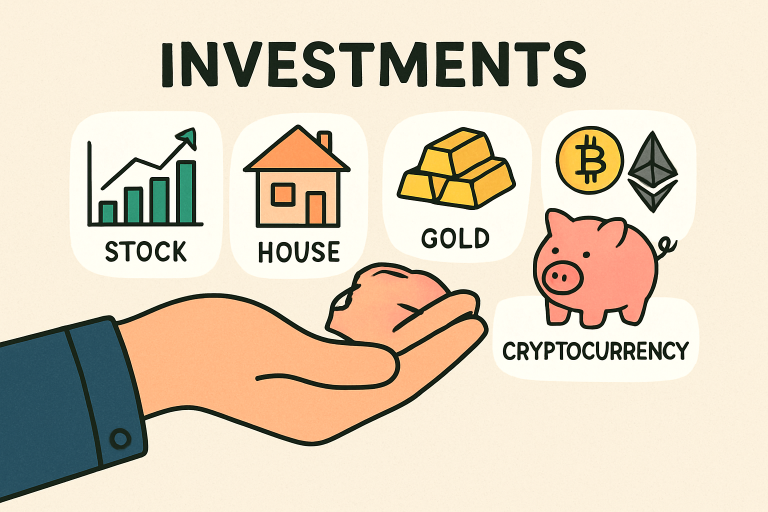
Stocks represent partial ownership of a company. When you buy shares, you own a piece of that business and have a claim on its profits and assets. Stocks can offer substantial growth over time and frequently outperform other investments in the long run. However, they can also be volatile and fluctuate in value due to market changes. If you are new to investing, consider starting with established companies or index funds that track the overall market performance.
Bonds
Bonds are fixed-income securities issued by governments, corporations, or other entities to raise capital. When you buy a bond, you are essentially lending money in exchange for regular interest payments and the return of your original investment upon maturity. Bonds generally carry lower risk than stocks and are often used to balance out a portfolio. They are ideal for investors who prefer steady, predictable income and lower exposure to market swings.
Mutual Funds
Mutual funds pool money from many investors to invest in a diversified portfolio of stocks, bonds, and other securities. Managed by professional investment managers, mutual funds help beginners achieve diversification without having to pick individual investments. They often carry management fees, so it’s important to consider costs and investment objectives before choosing a fund. Mutual funds are well suited to those who want a “hands-off” approach and the benefit of professional expertise.
Exchange-Traded Funds (ETFs)
ETFs are similar to mutual funds in that they hold a basket of different assets, but they are traded on stock exchanges like individual stocks. One advantage of ETFs is the ability to buy and sell throughout the trading day, as well as lower expense ratios than many mutual funds. ETFs can provide instant diversification and are available for a wide range of asset classes, from stocks and bonds to commodities.
Real Estate
Real estate investing involves purchasing property with the expectation of earning a return through rental income, future resale, or both. Beginners might consider starting with Real Estate Investment Trusts (REITs), which allow you to invest in large-scale properties without the responsibilities of being a landlord. Real estate can offer passive income, potential tax benefits, and serve as an effective hedge against inflation. However, direct property investment typically requires more capital and involvement in property management.
High-Yield Savings Accounts
For risk-averse individuals seeking immediate access to their funds, high-yield savings accounts are an excellent option. They offer competitive interest rates compared to traditional savings accounts, making them suitable for short-term savings or emergency funds. While the returns are modest, the safety and liquidity are top priorities for conservative investors.
Certificates of Deposit (CDs)
Certificates of Deposit (CDs) are time-bound savings instruments offered by banks. In exchange for locking in your money for a specified period, you receive a fixed interest rate. CDs are among the safest investment vehicles, often insured by government agencies, though withdrawing your funds early usually incurs penalties. They work best for those who can leave their savings untouched until maturity.
Commodities
Commodities are physical goods such as gold, oil, and agricultural products. Investing in commodities can provide a hedge against inflation and economic uncertainties. However, commodities are often subject to price volatility due to supply-and-demand fluctuations, geopolitical events, and weather patterns. For beginners, it is advisable to approach commodity investing with caution and ensure it is part of a well-balanced portfolio.
Cryptocurrencies
Cryptocurrencies, such as Bitcoin and Ethereum, have become popular as modern alternative investments. They offer high return potential but come with great risk, including significant price swings and regulatory challenges. Digital currencies are not suited for the faint of heart or for those who cannot afford to lose their investment. It is essential to conduct thorough research and only invest what you can afford to lose.
Peer-to-Peer Lending
Peer-to-peer lending platforms allow individuals to lend money directly to borrowers, bypassing traditional banks. Lenders can earn higher interest rates than those typically available from standard savings or CDs, though there is a risk of borrower default. These platforms often segment loans by risk category, allowing you to spread your investment among different borrowers to manage potential losses.
Final Thoughts
When approaching investments as a beginner, it is crucial to assess your risk tolerance, investment horizon, and financial goals. Diversification across different asset classes helps manage risk and increase the potential for steady returns. Start small, continue learning, and get comfortable with foundational principles before increasing your exposure. Smart investing is about making informed, patient decisions that align with your personal financial roadmap.
